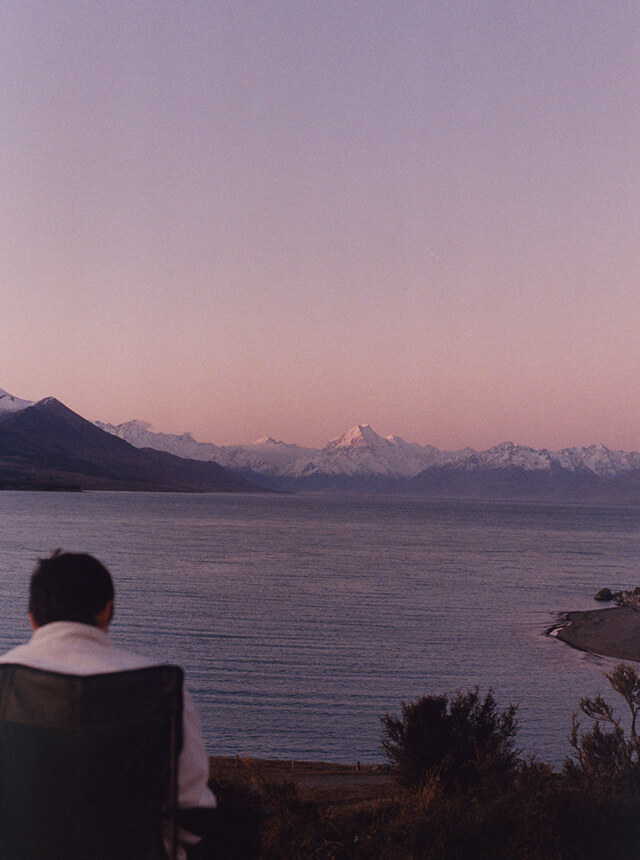
It is so hot every year that I feel like I’ll never again experience a refreshing summer where I can ride my bicycle following behind someone. I even hesitate to let my child sit in the back seat of my bike, and basically, I can’t go out without a car. The year before last, in August, I was shooting every day at the sea in Izu, and that heat almost killed me. This year, I just look out the window at the heated residential area and the blue-green trees in the hills behind my house, lit up by the sun........ And then I get fired up and go to work.
I’ve been thinking about it since I was in my 20s and lately considering it again: my career (growth). In conclusion, I don’t think you should care about such things. Or rather, you shouldn’t make them your purpose. As I see my one-year-old child, I think you should just do what is in front of you. If you do that, you will eventually get up and start walking. Plants grow their leaves in the direction of the sun, and animals go to where there is food. But everyone has lost sight of that, so they hastily devise a growth strategy. I wonder if we can really call it growth, like “where the hell is the sun?” A professor I had in university once said to me, “It is a characteristic of modernity to associate time with development and unfolding, so what was the time of the boy who stood around grazing sheep in the Western Sahara until sunset?”
Growth and summer remind me of a Taiwanese film with the rather embarrassing title ‘Blue Gate Crossing’ (2002). A high school girl, Meng, is asked by her best friend, Yuezhen, to deliver her love letter to Zhang, but Zhang ends up being attracted to Meng. When Zhang tries to get close to her, Meng begins to think that she may actually loves Yuezhen. The rawness of their bodies, their vitality, and their movements overflow from the screen, making it hard to look away. The many shots of their charming expressions speak more eloquently than anything else. They must have grown through that summer. But it was also simply the result of events. They were only doing their best to deal with what was right in front of them.